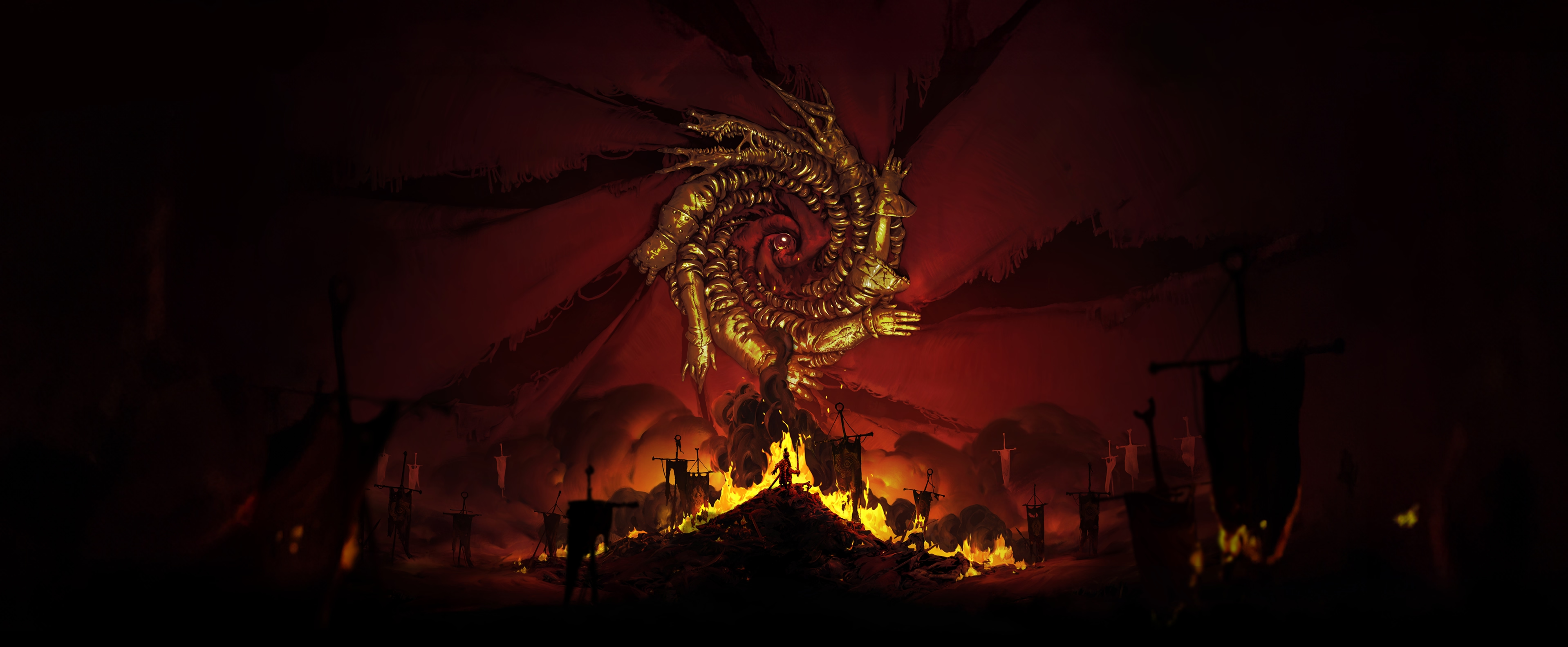
This No Rest for the Wicked review weighs its precise combat, painterly world, deep builds and co-op against Early Access changes before the 1.0 launch.
What kind of action RPG is it?
Wicked uses an isometric view but does not play like a screen-clearing power fantasy. Attacks carry recovery, stamina constrains offense and defense, and small groups of enemies demand attention. Weapons have individual move sets, making the feel of a drop as important as its damage and rarity.
Loot, runes, gems and enchantments provide ARPG depth around that deliberate combat. The result sits between familiar genres without simply copying either one. Players who enjoy reading animations and earning a clean opening are more likely to appreciate it than players who want constant low-risk ability spam.
The strongest parts
Weighty combat
Timing, spacing and stamina make ordinary encounters consequential. Dodging, blocking and parrying are tools rather than automatic answers, and weapon animations create meaningful differences between builds. When a setup works, it feels learned rather than merely equipped.
Painterly world design
Moon Studios applies dramatic light, saturated color and deep shadow to a dark fantasy island. The fixed isometric framing frequently creates striking compositions, while vertical paths and concealed routes make the environment denser than a flat dungeon grid. The same camera can occasionally make a narrow ledge or climbable route harder to read.
Systems beyond combat
Sacrament changes the pace through vendors, town projects, storage, crafting and housing. Gathering wood, ore and food feeds both preparation and settlement growth. These systems make exploration rewards feel connected to a place, although inventory and resource management can interrupt the combat rhythm for players who want a leaner loop.
| Strength | Trade-off |
|---|---|
| Deliberate, expressive weapon combat | Slower and more demanding than many ARPGs |
| Distinctive art and atmosphere | Fixed perspective can obscure navigation |
| Flexible loot and rune combinations | Random drops can delay a desired setup |
| Crafting, housing and town development | Inventory work can break momentum |
| Online co-op for up to four players | Shared-world choices need coordination |
What has changed since the 2024 reviews
The supplied IGN review evaluated the April 2024 Early Access build. Its praise for combat, art, exploration and build variety remains useful, but several limitations are historical rather than current. The review said multiplayer was absent and respeccing was unavailable; later updates added online co-op and a route to respec through Crucible progression.
This is why an Early Access review needs a date attached. The Breach expanded the world and story, The Breach Refined adjusted balance and quality of life, and Together introduced four-player online co-op. Technical performance, loot balance and progression have also continued to evolve.
Co-op changes the recommendation
The campaign can now be shared online by up to four players. Persistent realms and portable characters make group play more flexible than a host-only session, while trading and storage allow cooperation around loot. Realm progress can change without everyone present, so groups should set expectations before advancing shared quests.
There is still no confirmed couch co-op in the supplied official feature list. Friends in one room may need separate systems and online access. Players buying specifically for local split screen should wait for an explicit announcement rather than infer it from the word “co-op.”
Early Access concerns
The central concern is change. Moon Studios has already announced a reimagined class and progression system for 1.0, so current build guides and balance conclusions are temporary. The final story arc and more regions are also held for the October release.
PC requirements are substantial enough to check carefully, including an SSD requirement and 16 GB minimum memory on the current Steam page. Meeting the list does not guarantee a particular frame rate. Players sensitive to technical variance should review recent reports for their exact hardware and consider waiting for final requirements.
Who should buy now?
Buy now if the current Steam build already satisfies the reason you want the game: deliberate combat, exploration, build experimentation or online co-op. Early Access participation also means accepting patches and potential progression changes. Judge the live product rather than treating every announced feature as already delivered.
Wait if you want the completed story, the redesigned 1.0 progression, an exact console launch package or independent reviews of the final build. PS5 players must wait until October, while Xbox and Switch 2 players do not yet have a date. Game Pass is unannounced.
Frequently asked questions
Is No Rest for the Wicked a Soulslike?
It borrows deliberate, stamina-based combat and a strong emphasis on reading enemies, while combining those ideas with isometric ARPG loot, crafting and town systems. The label is useful, but incomplete.
Is the game finished?
No. The Steam version remains in Early Access until the confirmed October 2026 version 1.0 launch.
Is the old IGN score still current?
The supplied IGN article is a review of the 2024 Early Access build, not the current 2026 build or final 1.0 release. Its observations provide context, but feature availability must be updated separately.